Klara Albrecht · 28 October 2026
Polish Universities Combine AI Tutoring Platforms and International Alliances to Address Lecturer Shortages While Improving Matura Examination Outcomes
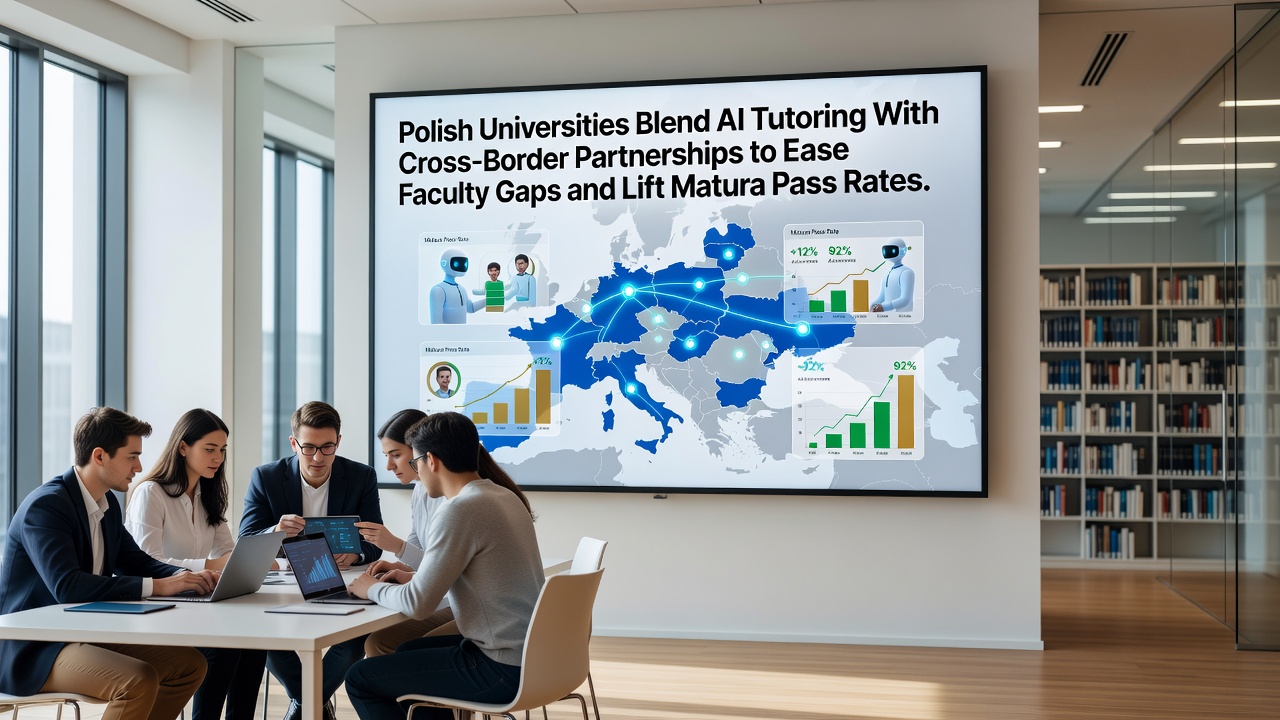
Polish higher education institutions have expanded their use of artificial intelligence tutoring systems alongside partnerships with universities in Germany, France, and the Netherlands since early 2025, and these initiatives target both instructor vacancies and national Matura examination results. Data from the Polish Ministry of Education and Science indicate that faculty positions in mathematics and foreign languages remained unfilled at rates above 12 percent in public universities during the 2025 academic year, prompting administrators to integrate AI platforms that deliver personalized instruction outside regular class hours.
Faculty Shortages Prompt Strategic Shifts
Observers note that many departments in regional universities operate with reduced teaching staff after retirements and international recruitment drives by Western European institutions accelerated between 2023 and 2025, while enrollment in STEM programs continued to rise. Researchers at the University of Warsaw documented that student-to-faculty ratios in computer science climbed from 18:1 in 2022 to 27:1 in 2025 across multiple institutions, and this imbalance coincided with stagnant Matura pass rates in advanced mathematics, which hovered near 68 percent nationally according to Central Examination Commission reports released in July 2025.
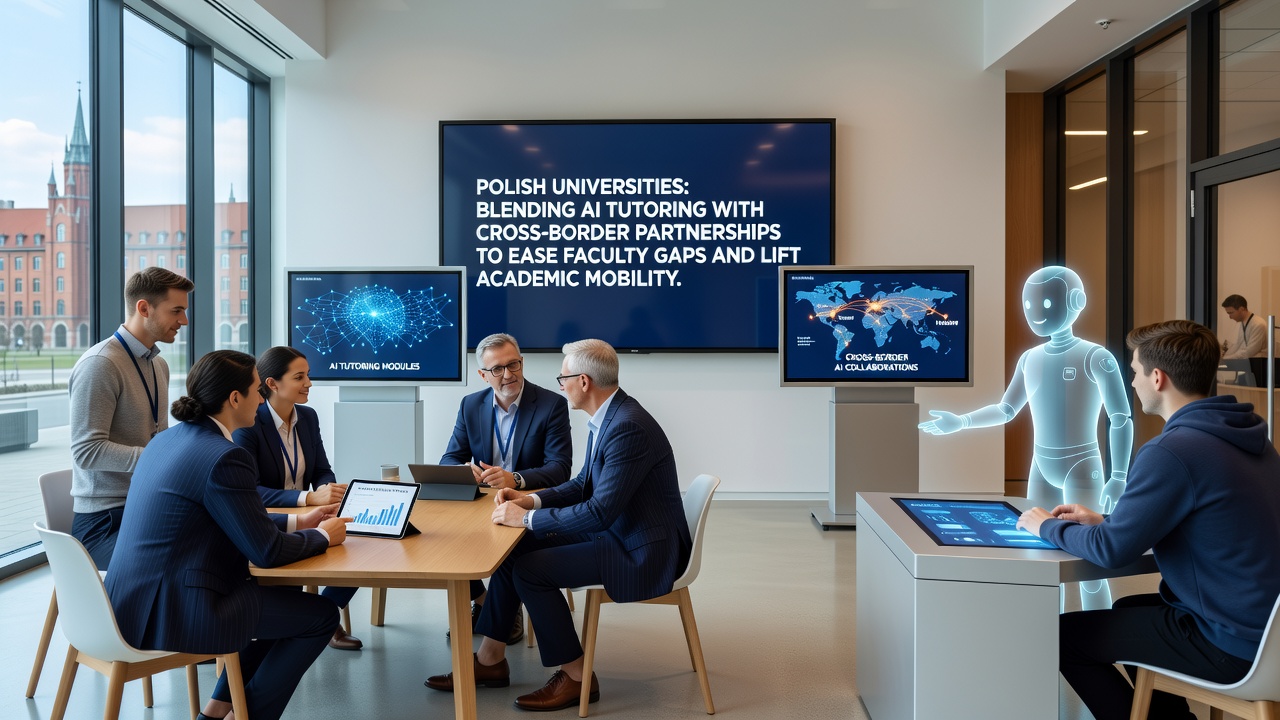
Administrators responded by licensing adaptive learning software that analyzes individual performance data and generates targeted exercises, and these tools operate in Polish, English, and Ukrainian to accommodate growing numbers of international students. Partnerships with institutions such as TU Delft and Sorbonne University supply visiting lecturers through virtual exchange programs that supplement on-site instruction, and joint courses began in October 2026 at five Polish universities.
AI Tutoring Implementation Details
Systems deployed at institutions including Jagiellonian University and Gdańsk University of Technology track student progress through weekly Matura-style assessments and adjust difficulty levels automatically, and preliminary figures released by the Ministry show average score improvements of 7 percentage points among users who completed at least 40 hours of AI-supported practice during the 2025-2026 academic year. The platforms integrate with existing learning management systems so that faculty members can monitor usage without additional administrative workload, while cross-border partners contribute curriculum modules aligned with both Polish Matura standards and European Qualification Framework descriptors.
Cross-Border Partnerships Expand Reach
Agreements signed in late 2025 between Polish consortia and universities in the Benelux region established shared digital libraries and co-taught seminars delivered in hybrid formats, and these arrangements allow Polish students to receive credit toward their degrees while reducing pressure on local teaching staff. One collaboration between Wrocław University of Science and Technology and Eindhoven University of Technology focuses specifically on physics and engineering preparatory courses for Matura candidates, and enrollment in these modules reached 1,800 students by September 2026. Data compiled by the European University Association indicate that such alliances have increased the number of jointly supervised master's theses by 22 percent across participating Polish institutions compared with 2024 figures.
Funding for these initiatives comes partly from the European Union's Erasmus+ program and national recovery funds allocated to digital education infrastructure, and the Ministry of Education and Science reported that 34 million euros supported AI tutoring licenses and partnership coordination costs during the 2025 fiscal year. Participation remains voluntary for students, yet completion rates for the supplementary AI modules exceed 75 percent at universities that tie usage to course credit incentives.
Measured Effects on Matura Performance
Early evaluations conducted by the Educational Research Institute in Warsaw compared Matura results from schools whose graduates participated in university-led AI tutoring programs against control groups, and the analysis found statistically significant gains in both pass rates and average scores in Polish language and mathematics sections. The study, published in September 2026, examined data from over 12,000 candidates and controlled for prior academic performance and socioeconomic factors. Universities involved in the partnerships have begun sharing anonymized usage analytics with secondary schools to help teachers identify topics where additional classroom time yields the greatest returns.
Similar patterns appear in language subjects, where AI conversation agents developed through the international partnerships provide practice opportunities that local staff shortages previously limited. Pass rates for advanced English Matura examinations rose from 71 percent to 79 percent among participants at partner institutions between 2024 and 2026, according to aggregated examination board statistics.
Conclusion
Polish universities continue to refine these combined approaches as October 2026 data collection concludes, and ongoing monitoring by the Ministry and partner institutions will determine whether the AI tutoring and cross-border partnership model sustains improvements in both faculty workload management and Matura outcomes over multiple examination cycles. Reports scheduled for release in early 2027 will provide further longitudinal figures on retention, graduation rates, and long-term effects on student preparedness for higher education.